FAQ – Dhanushkodi & Arichal Munai

Frequently Asked Questions – Dhanushkodi & Arichal Munai
1. Rameswaram to Arichal Munai – How Long Does the Full Trip Take?
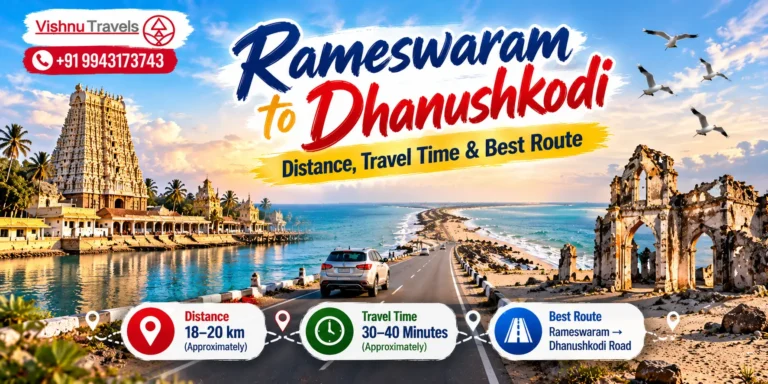
The distance from Rameswaram to Arichal Munai is approximately 24–25 km one way, and the drive usually takes around 40–50 minutes without long stops. For the complete trip covering Dhanushkodi sightseeing and Arichal Munai, travellers can generally keep around 2–3 hours, depending on traffic, sightseeing stops and checkpost conditions.
2. Can Private Cars Go to Dhanushkodi and Arichal Munai?
Yes. Private cars can generally travel from Rameswaram to Dhanushkodi and continue towards Arichal Munai using the paved coastal road. However, access to the final stretch is controlled by local authorities and may be restricted depending on weather, sea conditions or safety requirements.
3. Dhanushkodi Entry Restrictions – What Travellers Should Know Before Going
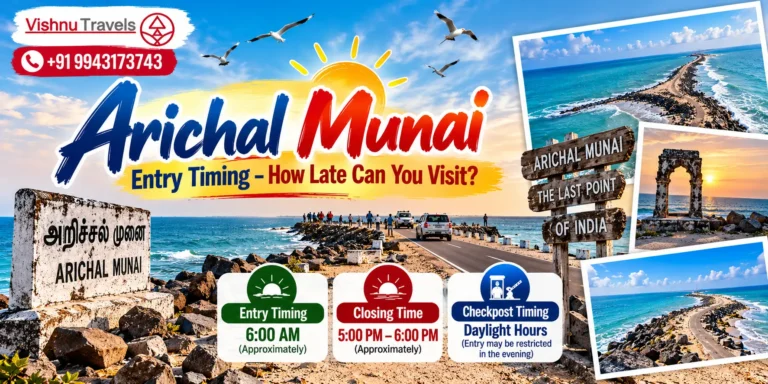
Dhanushkodi and Arichal Munai are mainly accessible during permitted daylight hours. Entry may be stopped earlier because of rough sea conditions, heavy rain, strong winds or other safety concerns. Travellers should follow police and checkpost instructions and avoid planning the journey too close to evening closing time.
4. Best Time of Day to Visit Dhanushkodi
Morning to early afternoon is generally the most convenient period for a Dhanushkodi trip. Starting earlier gives travellers sufficient daylight to visit the old town ruins, coastal areas and Arichal Munai without rushing before evening access restrictions.
5. Dhanushkodi Sunrise – What Time Should You Leave Rameswaram?
Sunrise time at Dhanushkodi changes throughout the year. Since the drive from Rameswaram to Dhanushkodi takes approximately 30–40 minutes, travellers should check the sunrise time for their specific travel date before deciding when to leave. Very early access may also depend on local entry restrictions.
6. Is Dhanushkodi Open During Rain and Bad Weather?
Dhanushkodi may remain accessible during light rain, but entry can be temporarily restricted during heavy rainfall, strong winds, rough seas, poor visibility or severe weather conditions. Local authorities may stop vehicles from proceeding towards Dhanushkodi or Arichal Munai when conditions are considered unsafe.
7. Dhanushkodi Beach Safety – Where Tourists Should and Shouldn’t Enter the Sea
Tourists should enter the water only in areas where it is permitted and conditions appear safe. Avoid isolated coastal stretches, areas with strong currents, rough waves and places marked with warning signs. Visitors should follow local safety instructions rather than assuming every beach section is suitable for swimming.
8. Dhanushkodi Old Church – History & What Remains Today
The Dhanushkodi Old Church is one of the prominent ruins remaining from the former coastal settlement. The structure was badly damaged during the devastating 1964 cyclone. Today, portions of its walls remain standing and provide visitors with a glimpse of Dhanushkodi before the disaster.
9. Dhanushkodi Railway Station Ruins – Story Behind the Abandoned Station
Dhanushkodi once had a railway connection that served the town and passengers travelling towards the ferry connection with Sri Lanka. The railway infrastructure was devastated during the 1964 cyclone. The remaining station ruins are now among the historical reminders of old Dhanushkodi.
10. What Happened to Dhanushkodi in the 1964 Cyclone?
A powerful cyclone struck Dhanushkodi in December 1964, causing extensive destruction and major loss of life. Railway infrastructure, buildings and much of the coastal settlement were devastated. The disaster permanently changed Dhanushkodi, and several surviving ruins can still be seen today.
11. Kothandaramaswamy Temple – Timings, History & Dhanushkodi Route
Kothandaramaswamy Temple is located along the route towards Dhanushkodi and is traditionally associated with the Ramayana, particularly Vibhishana’s surrender to Lord Rama. Travellers can include the temple while travelling between Rameswaram and Dhanushkodi. Temple opening hours may vary on festival and special days, so current timings should be confirmed before visiting.
12. Arichal Munai – Why Is It Called the Last Land of India?
Arichal Munai is popularly referred to as the “Last Land of India” because it is the farthest accessible coastal point normally reached by tourists travelling along the Dhanushkodi road on Rameswaram Island. Its location at the end of the road and expansive sea views have made it one of the area’s most recognised viewpoints.
13. Dhanushkodi vs Arichal Munai – Are They the Same Place?
No. Dhanushkodi and Arichal Munai are different locations. Dhanushkodi refers to the historic coastal settlement and surrounding area, while Arichal Munai lies farther along the same route and is generally the final accessible point reached by tourists.
14. Dhanushkodi Old Town vs Arichal Munai – What Should You Visit?
Both can be included because they offer different experiences on the same route. Dhanushkodi Old Town is known for its cyclone ruins and historical remains, while Arichal Munai is known for its open coastal scenery and endpoint location. Travellers with sufficient time can comfortably include both.
15. How Much Time Should You Keep for Dhanushkodi Sightseeing?
Keeping approximately 2–3 hours for a Rameswaram–Dhanushkodi–Arichal Munai trip is practical for most travellers. More time may be required when including Kothandaramaswamy Temple, longer photography stops or additional time around the historic ruins.
16. Dhanushkodi Places to Visit in Correct Route Order
A practical sightseeing order from Rameswaram is:
Rameswaram → Kothandaramaswamy Temple → Dhanushkodi Old Town → Old Church & Railway Ruins → Dhanushkodi coastal area → Arichal Munai → Return to Rameswaram
Following the route in this order helps reduce unnecessary backtracking during the trip.
17. Dhanushkodi Trip with Senior Citizens – Road, Walking & Travel Tips
Senior citizens can cover most of the Dhanushkodi journey by vehicle because the main road is paved. Walking can be kept limited according to individual comfort. It is better to travel during cooler hours, carry drinking water, avoid prolonged exposure to strong afternoon sun and allow sufficient time at each stop without rushing.
Related Posts

Dhanushkodi Entry and Closing Timings
October 4, 2026 Read More →